Microlearning: Does Studying for 10 Minutes a Day Really Work?
Can studying for just 10 minutes a day really work? Microlearning suggests that it can. Instead of requiring hours of uninterrupted study, it breaks learning into short, focused sessions that fit into everyday life. Yet many people still believe meaningful learning only happens in a classroom, during a long online course, or after spending an entire weekend studying. As a result, many never begin because they simply cannot find the time.
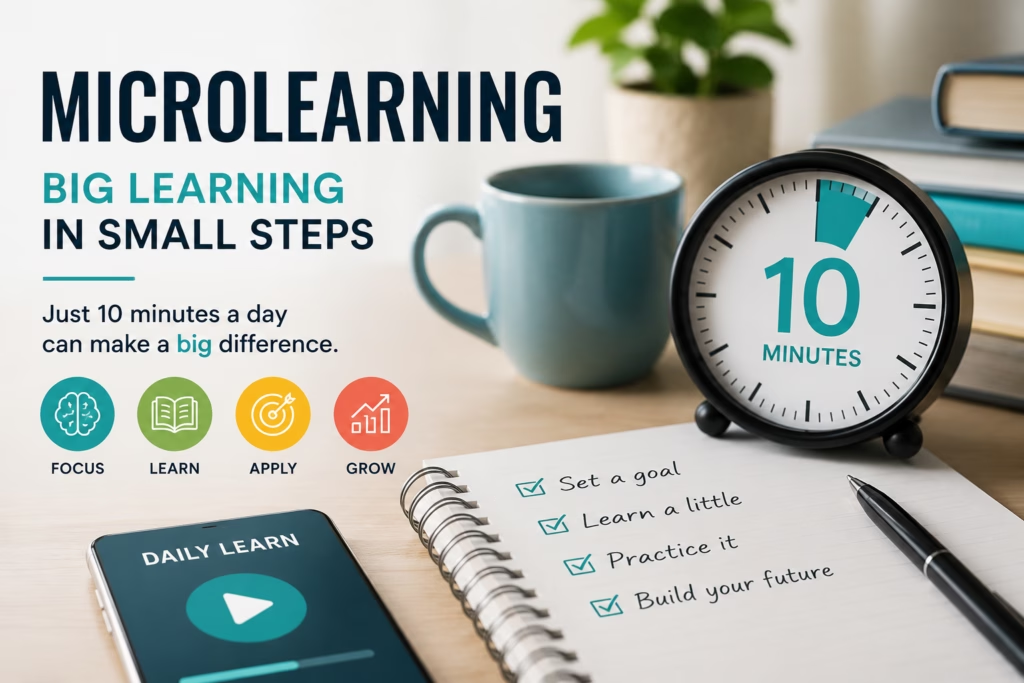
For working professionals, parents, business owners, and students, finding several hours each week to study can be difficult. Work deadlines, family responsibilities, appointments, and everyday commitments often leave little time or energy for learning. Even people who are highly motivated may postpone learning because they feel they cannot commit enough time to make it worthwhile.
This is where microlearning offers a different approach. Instead of expecting learners to complete long study sessions, microlearning breaks learning into small, focused lessons that usually take between five and fifteen minutes to complete. Each lesson concentrates on a single topic or skill, making it easier to fit learning into a busy schedule.
The idea is simple. Rather than trying to learn everything at once, learners make steady progress through regular, manageable sessions. A short lesson during a coffee break, travelling on public transport, or before starting work may be enough to gain new knowledge, develop a new skill, or strengthen an existing one.
The popularity of microlearning has grown rapidly in recent years. Organisations use it to train employees, universities include it in blended learning programmes, and many online learning platforms have adopted shorter lessons to improve learner engagement. The approach recognises that modern learners often have limited time and benefit from learning in smaller, more focused chunks.
However, popularity does not always mean effectiveness.
Can someone really develop valuable knowledge and practical skills by studying for only ten minutes a day?
Is microlearning a genuine improvement in the way we learn, or is it simply another educational trend?
In this article, I will discuss what microlearning is, why it works, where it is most effective, its limitations, and how you can use it to support your own personal and professional development.
What Is Microlearning?
Microlearning is an approach to learning that delivers information in small, focused sessions instead of long lessons. Each session usually lasts between five and fifteen minutes and concentrates on a single topic, concept, or skill. Rather than covering an entire chapter or module in one sitting, learners build their knowledge gradually through a series of short, manageable lessons.
The purpose of microlearning is not to reduce the quality of learning, but to make learning more accessible and easier to fit into everyday life. By focusing on one learning objective at a time, learners can concentrate on understanding and remembering the material before moving on to the next topic.
Microlearning can take many forms, including short videos, interactive quizzes, brief reading materials, flashcards, podcasts, infographics, or practical exercises. It is widely used in schools, universities, workplace training, and online learning because it allows learners to study whenever they have a few minutes available.
Although individual lessons are short, microlearning is most effective when the lessons are organised into a structured learning path. Each lesson builds on the previous one, enabling learners to develop deeper knowledge and practical skills over time.
Why Does Microlearning Work?
The effectiveness of microlearning is not based on the idea that people have short attention spans. Instead, it is supported by well-established principles from cognitive psychology and educational research that explain how people learn, process information, and remember it over time.
It Reduces Cognitive Overload
Our brains can only process a limited amount of new information at one time. When too much information is presented in a single lesson, learners may struggle to understand it, remember it, or connect it with what they already know. Educational psychologists refer to this as cognitive overload.
Microlearning addresses this challenge by presenting one topic at a time. Instead of asking learners to absorb an entire chapter or a one-hour lecture in a single sitting, each lesson focuses on one clear learning objective. This allows learners to concentrate on understanding the material before moving on to the next lesson.
It Improves Focus
Maintaining concentration becomes more difficult as study sessions become longer. Fatigue, distractions, and competing responsibilities can reduce the quality of learning, even if a learner spends more time studying.
Short, focused lessons make it easier to maintain attention from beginning to end. Rather than dividing their attention across many different topics, learners can concentrate on one subject and complete the lesson with a clear sense of progress.
It Strengthens Long-Term Memory
Learning something once does not guarantee that it will be remembered. Without review, much of what we learn is gradually forgotten.
Microlearning encourages regular review by making it easy to revisit previous lessons. Revising information in short sessions over several days or weeks strengthens memory and improves long-term retention far more effectively than trying to memorise everything in a single study session.
It Encourages Consistency
One of the greatest challenges in learning is not understanding the material but remaining consistent. Many people begin a course with enthusiasm but stop because they cannot find enough uninterrupted time to continue.
Microlearning lowers this barrier. A ten-minute lesson feels achievable, even on a busy day. As learners complete short lessons regularly, learning becomes part of their routine rather than an occasional activity. Over time, these small, consistent efforts lead to meaningful progress.
Small Lessons Lead to Significant Progress
Although a single microlearning session may only last a few minutes, the benefits accumulate over time. Learning one new idea, reviewing one important concept, or practising one practical skill every day may seem modest, but months of consistent learning can produce substantial knowledge and measurable skill development.
Therefore, microlearning does not mean learning less. It means learning more effectively by presenting information in a way that improves attention, understanding, memory, and long-term progress.
What Is Microlearning Good For?
Microlearning is particularly effective when the learning objective can be divided into small, manageable units. Rather than trying to master an entire subject in one sitting, learners gradually build their knowledge and skills by completing a series of focused lessons.
Flexibility is one of the greatest strengths of microlearning. It can be used to introduce new topics, reinforce existing knowledge, refresh previously learned material, or provide just-in-time learning when a specific skill is needed.
Some of the areas where microlearning works particularly well include:
- Learning software features, such as Excel formulas, Microsoft Word functions, PowerPoint tools, or data analysis techniques.
- Improving writing skills, including grammar, punctuation, business writing, report writing, and professional communication.
- Learning to use AI tools, such as writing effective prompts, evaluating AI-generated responses, and applying AI to everyday workplace tasks.
- Building foreign language vocabulary by learning a few new words or phrases each day and reviewing them regularly.
- Understanding management principles, including leadership, delegation, conflict resolution, performance management, and communication.
- Workplace compliance training, such as health and safety, cybersecurity awareness, data protection, and organisational policies.
- Customer service development, including communication techniques, handling complaints, active listening, and building positive customer relationships.
Microlearning is also valuable for professional development because it enables learners to keep their knowledge up to date without interrupting their daily work. As industries evolve and new technologies emerge, professionals can continually develop their expertise through short, focused learning sessions instead of waiting until they have time for a lengthy course.
When these individual lessons are combined into a structured learning programme, they become powerful building blocks that support continuous learning and long-term career development.
What Is Microlearning Not Good For?
Although microlearning is an effective way to acquire knowledge and develop many practical skills, it is not suitable for every type of learning. Some subjects are simply too complex to be mastered through short lessons alone.
For example, you cannot become a doctor, an engineer, an accountant, or another highly qualified professional by studying for ten minutes a day. These professions require years of structured education, supervised learning, practical experience, and formal assessment to develop the necessary knowledge, judgement, and competence.
The same principle applies to many advanced skills. Short lessons can introduce important concepts and explain individual techniques, but true competence usually requires learners to:
- Study topics in greater depth.
- Complete practical projects and assignments.
- Apply their knowledge in real-world situations.
- Receive constructive feedback from instructors, mentors, or experienced professionals.
- Reflect on mistakes and improve through continued practice.
Microlearning should therefore be viewed as one part of a broader learning strategy rather than a complete educational solution. It is highly effective for introducing new ideas, reinforcing existing knowledge, refreshing important information, and supporting continuous professional development. However, it cannot replace comprehensive courses, practical experience, or formal qualifications where these are required.
The greatest value of microlearning lies in helping people learn consistently. For many learners, short, regular study sessions provide a realistic way to build knowledge over time. When combined with deeper study, practical application, and meaningful feedback, microlearning becomes a powerful tool for lifelong learning.
The Real Power of Microlearning
Ten minutes may not seem like enough time to make meaningful progress. Many people assume that unless they can study for an hour or more, it is not worth starting.
However, learning is not measured by the length of a single study session. It is measured by what happens when those sessions are repeated consistently over time.
Ten minutes each day adds up to approximately sixty hours of focused learning over a year. More importantly, it creates a regular learning habit. Instead of waiting for the “perfect time” to study, learners continue making small but steady progress, even on their busiest days.
This consistency is where microlearning becomes powerful. Knowledge builds lesson by lesson. Skills improve through regular practice. Confidence grows as learners repeatedly apply what they have learned. Over weeks and months, these small improvements accumulate into substantial personal and professional development.
Many successful professionals do not continue learning because they have more free time than everyone else. They continue learning because they make learning a regular part of their routine. Microlearning supports this habit by removing one of the biggest barriers to lifelong learning: the belief that meaningful progress requires large amounts of time.
Ultimately, the greatest strength of microlearning is not that each lesson is short. It is that short lessons make it much easier for people to keep learning. Over time, consistency almost always produces better results than occasional bursts of intensive study.

How to Use Microlearning Effectively
Like any learning approach, microlearning works best when it is used intentionally. Simply watching a few short videos from time to time is unlikely to produce meaningful results. To gain the greatest benefit, learners should develop consistent study habits and actively apply what they learn.
Focus on one topic at a time.
Each study session should have one clear objective. Trying to learn several unrelated topics in ten minutes reduces concentration and makes it more difficult to remember what you have learned.
Study at the same time each day.
Learning is easier to maintain when it becomes part of your daily routine. Whether you study before work, during lunch, or in the evening, a regular schedule helps turn learning into a lasting habit.
Review previous lessons regularly.
Learning is strengthened through repetition. Spending a few minutes revising earlier lessons helps move information from short-term memory into long-term memory and reduces forgetting.
Apply your knowledge immediately.
Whenever possible, put new knowledge into practice straight away. Use the Excel formula you have just learned, try the AI prompt you have studied, or apply the communication technique in your next conversation. Practical application reinforces learning and improves confidence.
Combine microlearning with larger projects.
Microlearning is most effective when it supports a broader learning goal. Short lessons can introduce concepts and develop individual skills. Larger projects, assignments, or real-world tasks bring those skills together and deepen understanding.
When you combine regular study, periodic review, and practical application, even ten minutes a day can become a powerful investment in your personal and professional development.
Conclusion
Microlearning is not a shortcut to expertise, nor does it replace comprehensive courses, practical experience, or formal qualifications. Complex knowledge and professional competence still require deeper study, sustained practice, and meaningful feedback.
Microlearning offers a realistic and sustainable way for busy people to continue learning throughout their careers. It breaks learning into short, focused sessions, ad removes one of the greatest barriers to personal and professional development: the belief that you need hours of free time before it is worth starting.
Ten minutes may not seem significant on any single day. However, when those ten minutes become a daily habit, they can lead to substantial growth in knowledge, skills, and confidence over time.
In the end, successful lifelong learners are not necessarily those who study the longest. They are often those who keep learning consistently. Microlearning makes that consistency achievable, and that is where its greatest value lies.
Remember: You do not need to find hours to start learning. You simply need to start. Ten focused minutes today can become the knowledge, skills, and opportunities that shape your future.
If you are looking for practical online courses that fit into a busy schedule, visit the eCoursez course store. Our courses are designed to help you build practical knowledge and professional skills through structured, self-paced learning, one lesson at a time.